Practical Self Defense that is Instinctive and Easy to You
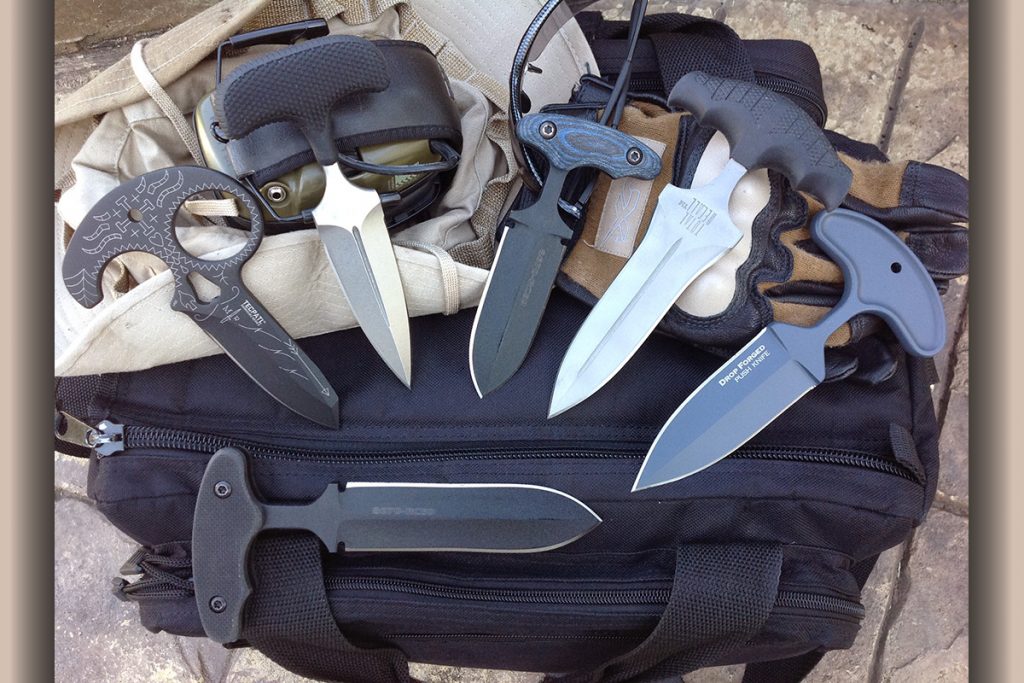
Push Daggers – As an experienced martial artist with extensive experience in close-quarters combat, I’ve found push daggers to be among the most specialized yet effective self-defense tools available. This review analyzes their practical applications, advantages, and limitations for personal protection.
Effectiveness for Self-Defense
Push daggers are exceptionally effective for self-defense due to their intuitive deployment and focused penetration power. Their design allows even those with minimal training to deliver powerful, accurate thrusts using a natural punching motion. The effectiveness comes from their ability to transform a simple punch into a potentially lethal strike by concentrating force on a small point. Historical accounts and modern testimonials confirm their stopping power, with documented cases of a single strike ending confrontations.
The push dagger’s design creates what tactical experts call “force multiplication” – it significantly enhances what you deliver when you land a strike. This makes it particularly valuable for individuals who may lack physical strength or extensive combat training but still need an effective defensive option.
Key Advantages
Push daggers offer several distinct advantages over other self-defense weapons:
- Disarming Resistance: Their T-shaped grip makes them extremely difficult for an attacker to disarm once deployed. The grip design ensures retention even during high-stress encounters.
- Concealment and Portability: Their compact size allows for easy concealment and integration into everyday carry (EDC) setups. Many models can be carried discreetly without printing through clothing.
- Intuitive Deployment: The natural punching motion required for effective use requires minimal training. This intuitive design makes them particularly effective for civilians without extensive martial arts background.
- Accessibility: They can be quickly accessed with one hand, allowing for rapid deployment when seconds count. Many sheaths support ambidextrous draw options for tactical flexibility.
- Focused Power Transfer: The design ensures maximum force transfer from hand to blade, creating serious penetration power even with minimal training.
Limitations and Potential Drawbacks
Despite their advantages, push daggers have significant limitations:
- Limited Range: They have a shorter effective range compared to traditional knives, requiring you to be in close proximity to an attacker. This inch or two disadvantage can be tactically significant.
- Limited Versatility: They have primarily defensive applications with minimal utility value. Unlike folding knives, they cannot be used for everyday cutting tasks.
- Delayed Effect: Sometimes attackers don’t immediately realize they’ve been stabbed, reducing immediate stopping power. This can be particularly problematic with adrenaline-fueled aggressors.
- Legal Restrictions: Laws vary significantly by jurisdiction, with some states restricting or prohibiting them entirely. Always verify local regulations before carrying.
- Psychological Barrier: Their intimidating appearance may create hesitation to deploy in borderline situations.
Practical Techniques for Self-Defense Situations
Effective use of push daggers requires understanding proper techniques:
Grip Methods
Two primary grips are recommended for push daggers:
- Between the index and middle fingers
- Between the index and ring fingers
The narrower the base of the handle, the better for gripping between the third and fourth fingers.^9^ This ensures maximum retention during dynamic encounters.
Deployment Strategies
Practice drawing from your preferred carry position to develop muscle memory. Consider carrying in the non-dominant hand to keep your strong hand free for other tasks or as a backup option.
Target Selection
Focus on vital areas for maximum effectiveness:
- Throat and neck region
- Ribs and torso
- Abdomen and solar plexus
Integration with Other Skills
Push daggers are most effective when integrated with other defensive skills:
- Dirty Boxing: Combining clinch work with strikes enhances effectiveness. Positional control allows for more accurate targeting.
- Weapon Retention: Practice maintaining control of the weapon during grappling situations.
- Situational Awareness: Like all defensive tools, effectiveness increases with proper threat assessment and avoidance skills.
Training Recommendations
- Practice drawing and striking from various positions
- Train with inert training models to develop proper technique
- Consider professional instruction from qualified self-defense instructors
- Integrate push dagger drills into your regular training routine
Legality of Push Daggers
The legal status of push daggers varies significantly across jurisdictions, making it essential to understand local regulations before carrying one for self-defense.
State-by-State Variations
Knife laws in the United States form a complex patchwork of regulations that differ by state and sometimes even by municipality. Some states allow most knives to be carried concealed with few restrictions, while others limit concealed carry based on blade length, knife type, or intended use.
- Prohibited in Some States: Several states specifically prohibit carrying push daggers as concealed weapons. These states often classify push daggers alongside other restricted knife types such as switchblades, ballistic knives, and dirks.
- Open Carry Requirements: In states where fixed blades are permitted, many require open carry in a sheath at the waist rather than concealed carry. This requirement typically applies to daggers and dirks, which would include push daggers.
- Location-Based Restrictions: Some states focus heavily on location-restricted knives, prohibiting them in certain areas like schools, government buildings, or public events.
Specific State Examples
- California: Under Penal Code § 21310, carrying a concealed dirk or dagger is punishable. Push daggers would likely fall under this prohibition.
- Texas: Texas law broadly limits municipal and county knife regulation through Local Government Code provisions on local preemption. However, certain restrictions still apply to specific knife types.
- New Jersey: Knife law in New Jersey prohibits ownership and carrying of gravity knives, dirks, daggers, switchblades, ballistic, or dangerous knives without any explainable reason.
- Florida: The state regulates knife ownership, allowing for recreational use or self-defense. Fixed blade knives are generally permitted with certain restrictions.
Federal Considerations
While there is no federal law specifically banning push daggers, certain federal restrictions may apply in specific contexts such as federal buildings, airports, and schools. The lack of a consistent federal definition further complicates the issue, leading to a patchwork of laws across the country.
Legal Recommendations
- Research Local Laws: Always verify local regulations before carrying a push dagger. Laws can vary significantly between municipalities within the same state.
- Consider Open Carry: In states where concealed carry is prohibited, open carry in a sheath at the waist may be permitted.
- Understand Intent: Some jurisdictions consider the intended use of the weapon when determining legality. Carrying for self-defense may be treated differently than carrying for offensive purposes.
- Stay Updated: Knife laws are subject to change, with some states regularly updating their regulations. Stay informed about current laws in your jurisdiction.
- Consult Legal Resources: Organizations like the American Knife and Tool Institute provide resources and updates on knife laws across the country.
Conclusion
Push daggers occupy a unique niche in the self-defense landscape. They offer exceptional close-quarters protection for those willing to invest in proper training and understand their limitations. While not as versatile as traditional knives, their intuitive deployment and focused power make them an excellent option for personal protection in specific scenarios.
For those considering adding a push dagger to their self-defense arsenal, I recommend researching quality models from reputable manufacturers like Cold Steel, Benchmade, TOPS, ESEE, and CRKT. Always prioritize training and legal compliance over equipment selection, as skill and awareness remain the primary factors in self-defense effectiveness.
Useful Links
- Knife Laws By State 2026
- Self-Defense Weapon Laws by State: Know What’s Legal
- Knife legislation – Wikipedia
- Pocket Knife Rules & Laws by State – in the U.S.
- U.S. Knife Laws by State 2026: Federal Rules & State Guides
|Bonus Section|
Quality Push Dagger Models: Tactical Recommendations
Based on my experience testing numerous push daggers in various training scenarios, I can recommend several models that stand out for their reliability, ergonomics, and effectiveness in self-defense situations.
My Personal Favorite
The P – Tool by SOB Tactical
The P-Tool Push Dagger isn’t just a solid self-defense tool—it’s my personal choice for everyday carry. From the moment I wrapped my hand around its ergonomic, impact-resistant handle, I knew this was something special. The ultra-sharp, reinforced blade delivers devastating stopping power while remaining compact enough to disappear in a pocket or waistband. What sets the P-Tool apart is its intuitive design: the push-style grip naturally aligns your striking fist, giving you instant, lethal force without fumbling or adjusting your hold. Whether you’re a seasoned carrier or new to defensive tools, the P-Tool offers unmatched reliability, discretion, and confidence. After testing multiple push daggers on the market, this one wins every time—and it’s earned its permanent spot in my rotation.
Top Tier Recommendations
Cold Steel Safe Maker I
The Safe Maker I represents Cold Steel’s commitment to functional design. Its 3.5″ blade provides excellent penetration while remaining legal in most jurisdictions. The T-handle design ensures retention during high-stress encounters, and the Secure-Ex sheath offers reliable carry options. What sets this model apart is its balance of size and concealability, making it an excellent choice for everyday carry.
Benchmade SOCP Dagger
Developed with input from special operations forces, the SOCP (Special Operations Combatives Program) dagger features a 3.22″ modified drop point blade. Its ergonomic handle design allows for immediate indexing in low-light conditions. The molded Kydex sheath provides multiple mounting options for tactical versatility. While pricier than some alternatives, its quality construction and thoughtful design justify the investment.
TOPS Knives C.U.M.A.
The C.U.M.A. (Close Quarters Unconventional Melee Application) push dagger features a 3.5″ blade with a distinctive design that maximizes penetration. Its textured G10 handle ensures positive control even with wet hands. The Kydex sheath offers both neck and belt carry options, making it adaptable to various carry preferences.
Mid-Range Options
ESEE Izula II Push Dagger Version
ESEE has adapted their popular Izula design into a push dagger configuration. The 2.75″ blade provides excellent cutting power while remaining compact. The molded polymer handle offers a secure grip, and the included sheath provides multiple carry options. ESEE’s reputation for quality control and customer service adds value to this mid-range option.
CRKT P.E.C.K.
The Personal Everyday Carry Kit (P.E.C.K.) from CRKT offers an affordable entry point for those new to push daggers. Its 2.25″ blade provides adequate penetration for self-defense while remaining highly concealable. The Zytel handle offers adequate grip, though not as secure as premium options. At its price point, it represents excellent value for budget-conscious practitioners.
Selection Criteria
When choosing a push dagger, consider these factors:
- Blade Length: Most states restrict blades to 4 inches or less for legal carry.
- Handle Design: Look for T-shaped handles that prevent hand slippage during use
- Sheath Quality: A reliable retention system is essential for secure carry
- Blade Steel: Premium steels like S35VN or 154CM offer superior edge retention
- Carry Options: Versatile mounting systems accommodate various carry preferences
Training Recommendations
Regardless of which model you select, proper training is essential:
- Practice drawing from your preferred carry position until it becomes second nature
- Train with inert training models to develop proper technique without risk of injury
- Consider professional instruction from qualified self-defense instructors
- Integrate push dagger drills into your regular training routine
- Practice under stress conditions to simulate real-world encounters
Remember that the tool is only as effective as the user’s skill and training. Invest time in developing proper technique before relying on any push dagger for self-defense.