
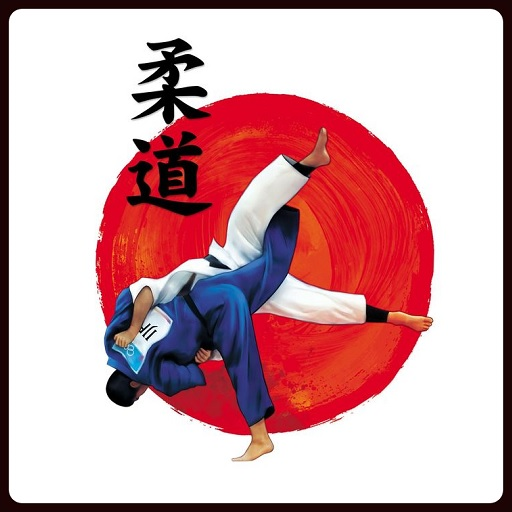
Understanding Judo’s Gentle Power More Than Just Throws
Judo – There’s a moment in every Judo match that seems to defy physics. One moment, two athletes are locked in a dance of grips and tension. The next, one is hurtling toward the mat with a force that seems entirely disproportionate to the movement that caused it. The thrower barely appears to have exerted himself. The Uki (the person being thrown), however, experiences the unmistakable sensation of having been hit with a planet.
This is not magic. This is Judo.
Judo is often translated as “the gentle way,” a name that seems almost comically at odds with the brutal efficiency of its techniques. But the gentleness isn’t about being soft—it’s about using minimum effort for maximum effect. It’s the art of taking an opponent’s force, redirecting it, and returning it with interest. It’s the closest thing martial arts has to a cheat code.
The Origins: How Jigoro Kano Changed Martial Arts Forever
Every great story has a beginning, and Judo’s begins with a small, unassuming man named Jigoro Kano.
Born in 1860 in what is now part of Kobe, Japan, Kano was not a natural athlete. He was small, sickly, and frequently bullied. Frustrated by his physical limitations, he began studying jujitsu, the ancient art of the samurai. But Kano was not content to simply learn techniques—he wanted to understand why they worked.
What made Kano revolutionary was his educational background. After graduating from the University of Tokyo’s Department of Aesthetics and Morals, he spent an additional year researching ethics in the Department of Philosophy. He wasn’t just interested in fighting; he was deeply invested in human development.
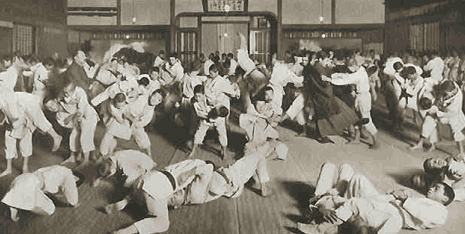
In 1882, Kano founded the Kodokan Judo Institute in Tokyo. He had done something unprecedented. He had taken the deadly techniques of classical jujitsu and stripped away the most dangerous elements, creating a safe, codified sport that could be practiced at full intensity without killing your training partner. More importantly, he embedded within it a philosophy that elevated physical training into a path for personal and social betterment.
Kano believed that Judo was intrinsically connected to inner growth. When he later became involved with the Olympic Movement, he strove to fuse the Olympic Spirit with the spirit of martial arts. For Kano, the dojo was a laboratory for building better human beings.
The Core Philosophy: Two Pillars of the Gentle Way
At the heart of Kano’s Kodokan Judo are two guiding principles that separate Judo from mere combat sports.
Seiryoku Zen’yo: Maximum Efficiency, Minimum Effort
The first principle, Seiryoku Zen’yo, is the secret behind that “hitting a person with a planet” feeling. It means using your energy in the most efficient way possible. Instead of meeting force with greater force, a Judoka learns to blend with an opponent’s attack, redirecting their momentum rather than opposing it.
Consider the alternative: a traditional “tough guy” might try to block a punch with a stronger punch. That’s a collision. A Judoka, by contrast, would step aside, guide the punching arm past its target, and use the attacker’s forward momentum to throw them to the ground. The Judoka didn’t win through superior strength. He won through superior strategy.
This principle extends far beyond the mat. In business, leadership, and personal life, Seiryoku Zen’yo asks: Where am I wasting energy? Is there a more elegant solution? How can I achieve my goal with less resistance?
Jita Kyoei: Mutual Welfare and Benefit
The second principle, Jita Kyoei, is perhaps even more profound. It translates to “mutual welfare and benefit”.
In most competitive endeavors, one person’s success requires another’s failure. Kano rejected this zero-sum thinking. He believed that true progress comes from raising each other up. You cannot develop your Judo in isolation. You need a training partner. You need them to push you, to challenge you, and to be strong themselves. Their growth enables your own.
This is revolutionary. It transforms the opponent from an enemy into a collaborator in mutual improvement. On the mat, you try to throw each other. Off the mat, you bow to each other. That spirit of reciprocal benefit is the moral engine of Judo, and it’s why Kano believed Judo could contribute to world peace.
Profiles in Judo: Three Icons of the Gentle Way
Judo’s influence extends far beyond Olympic podiums. Its practitioners have shaped culture, politics, and even the future of combat sports.
Jigoro Kano: The Philosopher-Founder
We’ve already met Kano, but his contribution cannot be overstated. He was the first Asian member of the International Olympic Committee (IOC) and worked tirelessly to bring the Olympics to Tokyo in 1940—a dream that was ultimately derailed by World War II and his own passing in 1938. Yet his vision of Judo as a tool for global cultural exchange continues to this day.
Theodore Roosevelt: The Fighter-President
Before he was charging up San Juan Hill or negotiating the end of the Russo-Japanese War, Theodore Roosevelt was learning Judo in the East Room of the White House.
In 1904, Roosevelt, an avid boxer and wrestler, became fascinated with the new martial art. He invited Professor Yoshiaki Yamashita, a direct student of Kano who would later become the first person ever awarded a 10th-degree black belt, to teach him and his family.
A photograph album from the UMass Amherst archives shows Yamashita demonstrating techniques, and the White House Historical Association has documented Roosevelt enthusiastically practicing throws on the White House floor. Roosevelt’s embrace of Judo, at a time when martial arts were little understood in the West, was a powerful endorsement that helped legitimize Kano’s art.
“Judo” Gene LeBell: The Godfather of Grappling
If Kano was the philosopher and Roosevelt the patron, Gene LeBell was the wild evangelist. LeBell was a walking legend. A 10th-degree red belt in Judo, a professional wrestler, and a Hollywood stuntman who worked on over 1,000 films, LeBell embodied the “maximum efficiency” principle in the most American way possible.
In 1963, LeBell accepted a challenge issued by a boxing writer who claimed a boxer could defeat any martial artist. The rules heavily favored the boxer—LeBell couldn’t kick, couldn’t attack below the waist, and had to wear a jacket his opponent could easily grab. LeBell’s opponent, Milo Savage, allegedly greased his jacket to prevent gripping.
Despite the stacked odds, LeBell took Savage down in the fourth round and choked him unconscious with a rear naked choke. The crowd rioted. Chairs flew. But LeBell had proven a point: grappling worked.
LeBell later trained a generation of fighters, including Ronda Rousey, bridging the gap between classical Judo and modern Mixed Martial Arts. He was, as his nickname suggested, the “Godfather of Grappling”.
Key Techniques: A Masterclass in Planetary Physics
Judo contains dozens of throws, but understanding even one reveals the entire philosophy. Let’s use Sasae Tsurikomi Ashi (the “foot block throw”) as our case study.
The Three Movements: Kuzushi, Tsukuri, Kake
Every Judo throw is broken into three phases, and Sasae Tsurikomi Ashi demonstrates them beautifully.
1. Kuzushi (Off-Balancing)
You cannot throw someone who is standing solidly. You must first destroy their structure. With a collar grip and a sleeve grip, you pull your opponent forward and rotate their body, forcing their weight onto their near leg.
From a physics perspective, you are shrinking their “base of support” from a rectangle (two feet) to a line (one foot). A body balanced on a line is inherently unstable.
2. Tsukuri (The Entry)
Once their weight is committed to that one leg, you slide in. You block their foot—not by kicking, but by placing your foot as an immovable object in the path of their moving leg.
This is the setup. Your body becomes a doorstop. Their forward momentum has nowhere to go.
3. Kake (The Execution)
Finally, you execute. You pull with your grips and rotate your upper body. Their blocked leg stops dead, but their upper body continues forward. Their center of mass travels over your block, and gravity does the rest.
This is the “hit with a planet” moment. You didn’t lift them. You didn’t overpower them. You simply redirected their own energy into the mat.
Cultural Impact: From the Dojo to the Boardroom
Judo’s influence has spread far beyond martial arts. The principles of Seiryoku Zen’yo and Jita Kyoei have been adapted into business strategy, leadership training, and even conflict resolution.
- Maximum Efficiency: In business, this means identifying the highest-leverage activities and avoiding “busy work.” It’s the 80/20 principle applied to corporate politics.
- Mutual Benefit: In negotiations, this means seeking win-win scenarios. The most successful deals are those where both parties feel they gained something.
- The Gentle Way: In leadership, this means flexibility. A rigid leader breaks under pressure. A Judo leader yields, redirects, and finds the path of least resistance to success.
Kano’s dream was to make the Olympic spirit of harmonized mind and body a part of global culture. While Judo became an official Olympic sport in 1964, its philosophical reach extends far beyond the medal podium.
Conclusion: Why Judo Still Matters
The world is full of bullies. It’s full of obstacles, unfair fights, and moments where sheer force seems like the only answer. Judo teaches us otherwise.
Jigoro Kano gave the world a martial art where the smallest person can throw the largest. Theodore Roosevelt brought that art into the White House. Gene LeBell proved it in a riot-filled arena against a boxer who cheated before the bell even rang.
But the real lesson of Judo isn’t about throwing people. It’s about understanding momentum. It’s about recognizing that resistance often creates more problems than it solves. And it’s about the radical idea that your success is tied to the success of those around you.
The next time life tries to push you over, don’t brace for impact. Step aside. Redirect. And remind yourself that you’re not just fighting—you’re practicing an art where maximum efficiency meets mutual benefit.
And if you do it right? You might just hit them with a planet.
Further Reading & Resources
- Kodokan Judo Institute (Official Site): kodokanjudoinstitute.org – The spiritual and technical headquarters of Judo, founded by Jigoro Kano.
- USA Judo: teamusa.org/usa-judo – The national governing body for Judo in the United States.
- “Judo: The Gentle Way” by Jigoro Kano – A collection of the founder’s writings on philosophy and technique.
- “The Pyjama Game: A Journey into Judo” by Mark Law – A highly readable history of the sport.
- Judo Channel (Glossary): judo-ch.jp/english/dictionary/terms/ – A comprehensive resource for Japanese terminology.
Have you ever trained in Judo, or are you considering starting? Share your thoughts in the comments below. And remember: the mat is always waiting. 🥋



Too funny love this concept, next time I throw someone I’m gonna think “I just hit you with a planet!” lol