Why Pessimists Lose: The Case for Optimism in a Cynical World
The Optimist Edge -The other night I was scrolling through my phone during a commercial break—something about the world ending, another celebrity scandal, and the late night show’s hateful political rant all in a 30-second span—and it actually seemed like I felt my IQ drop and my soul shrink. If you’re anything like me, you’ve had that moment where you wonder if we’re all just passengers on the Spaceship Titanic, except this time the iceberg is made of outrage, porn, and algorithm-fueled anxiety.
But here’s the thing: despite what your Twitter feed might tell you, there’s actually a lot to be optimistic about. No, I haven’t been drinking (well, not yet anyway). The data backs this up. Studies show that optimism literally rewires your brain for better problem-solving and resilience. As the stoics used to say, “The obstacle is the way”—or in modern terms, sometimes you just need to reframe your perspective before you throw your phone against the wall (something I wish I knew sooner).
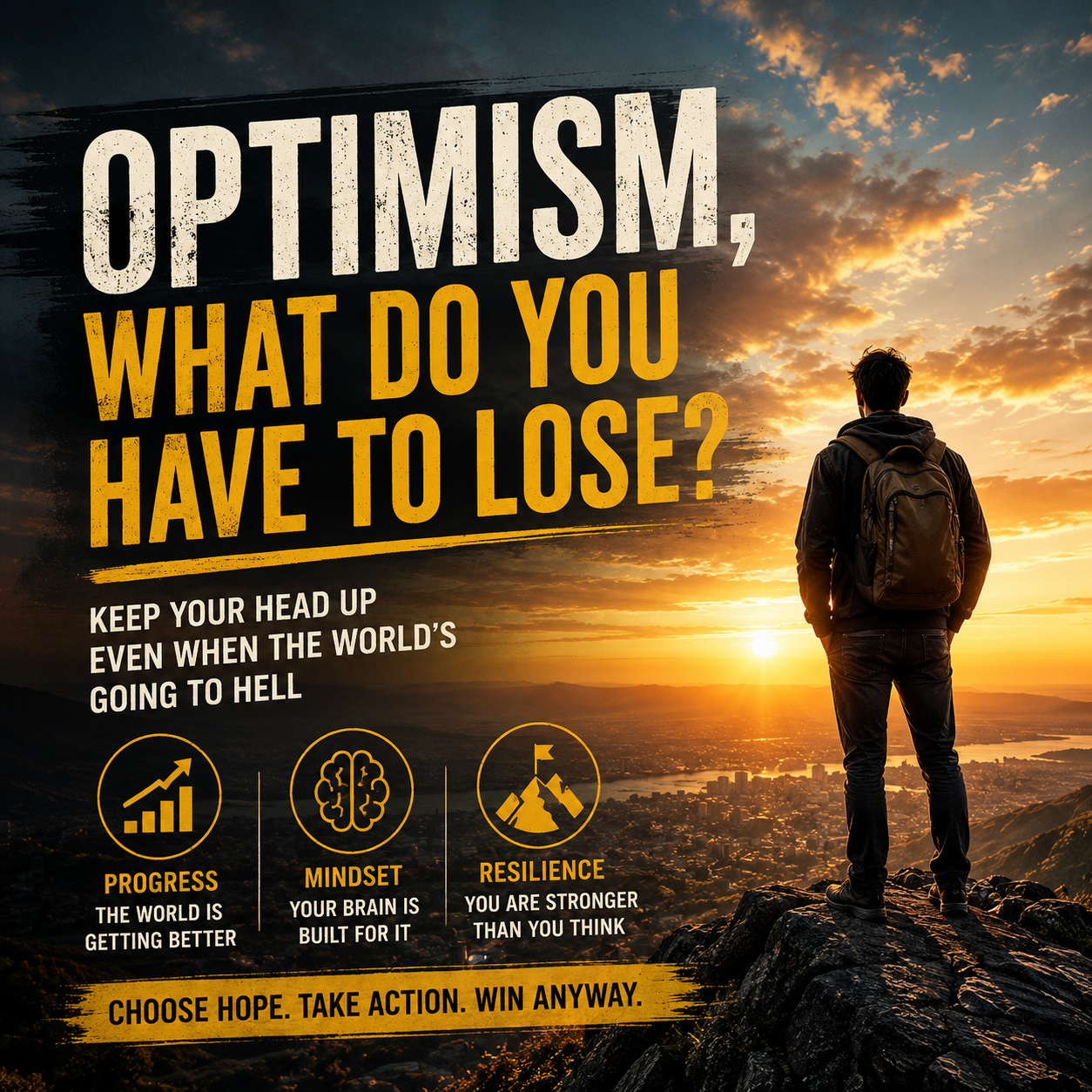
Reason #1: We’re Literally Living in the Golden Age of Human Progress
Before you roll your eyes and mutter “Tell that to my bank account,” hear me out. By almost every objective measure, humanity is crushing it right now. Global poverty has plummeted from 36% in 1990 to less than 9% today. Child mortality rates have dropped by more than half since 1990. We’ve literally reduced the number of people living in extreme poverty by over a billion people.
Steven Pinker, Harvard professor and author of “Enlightenment Now,” points out that “the world is not falling apart. The state of the world is better now than at almost any time in history.” Sure, you might not see that in your daily doomscroll, but that’s because good news doesn’t sell advertising space.
Think about it: our grandparents lived through world wars, polio epidemics, and had to use phone books like actual animals. We’re complaining about buffer speeds and avocado shortages. Perspective matters, fellas.
Reason #2: Your Brain is Built for Optimism—You Just Need to Flip the Switch
Here’s some science that’ll blow your mind: humans are naturally wired for optimism. Research from the University College London found that approximately 80% of people have an optimism bias—that tendency to believe things will turn out better than they realistically might. It’s literally our default setting.
The problem? We’ve spent years conditioning ourselves out of it with 24/7 news cycles and social media algorithms that feed on our fears. But you can rewire that circuitry. Studies on neuroplasticity show that practicing optimism—yes, it’s a practice—can physically change your brain structure.
As psychologist Martin Seligman puts it, “Optimists endure the same storms as pessimists, but they weather them differently.” They see setbacks as temporary rather than permanent, specific rather than universal, and external rather than internal. It’s not about ignoring problems—it’s about approaching them like a challenge rather than a death sentence.
Reason #3: The Comeback Story Always Beats the Victim Narrative
Let’s get real for a minute. Life’s going to throw curveballs at you—relationships end, jobs disappear, and sometimes you just have one of those years where everything seems to go sideways. But here’s the thing: humans are fundamentally comeback creatures.
Look at the data on resilience. Research from the American Psychological Association shows that most people who experience trauma actually demonstrate resilience over time, with only a small minority developing chronic difficulties. We’re built to bounce back, not break down.
As former Navy SEAL Jocko Willink says, “Good.” When everything goes wrong and you’re getting hammered by life, that’s when you find out what you’re made of. Every setback is just setup material for your comeback story. The victim narrative might get you sympathy, but the comeback story gets you respect—and more importantly, it gets you results.
The Bottom Line: Hope Isn’t Weakness, It’s Strategy
Look, I’m not saying you need to start skipping through meadows with rainbows shooting out of your ass. Optimism isn’t about ignoring reality—it’s about facing it with the belief that you can handle whatever comes your way.
In a world that profits from your fear and outrage, choosing optimism is the ultimate rebellion. It’s not just feel-good fluff—it’s a strategic advantage in life, love, and business. So yeah, maybe the world’s a mess sometimes, but you’ve got three things going for you: unprecedented historical progress, a brain wired for optimism, and the fundamental human capacity for resilience.