
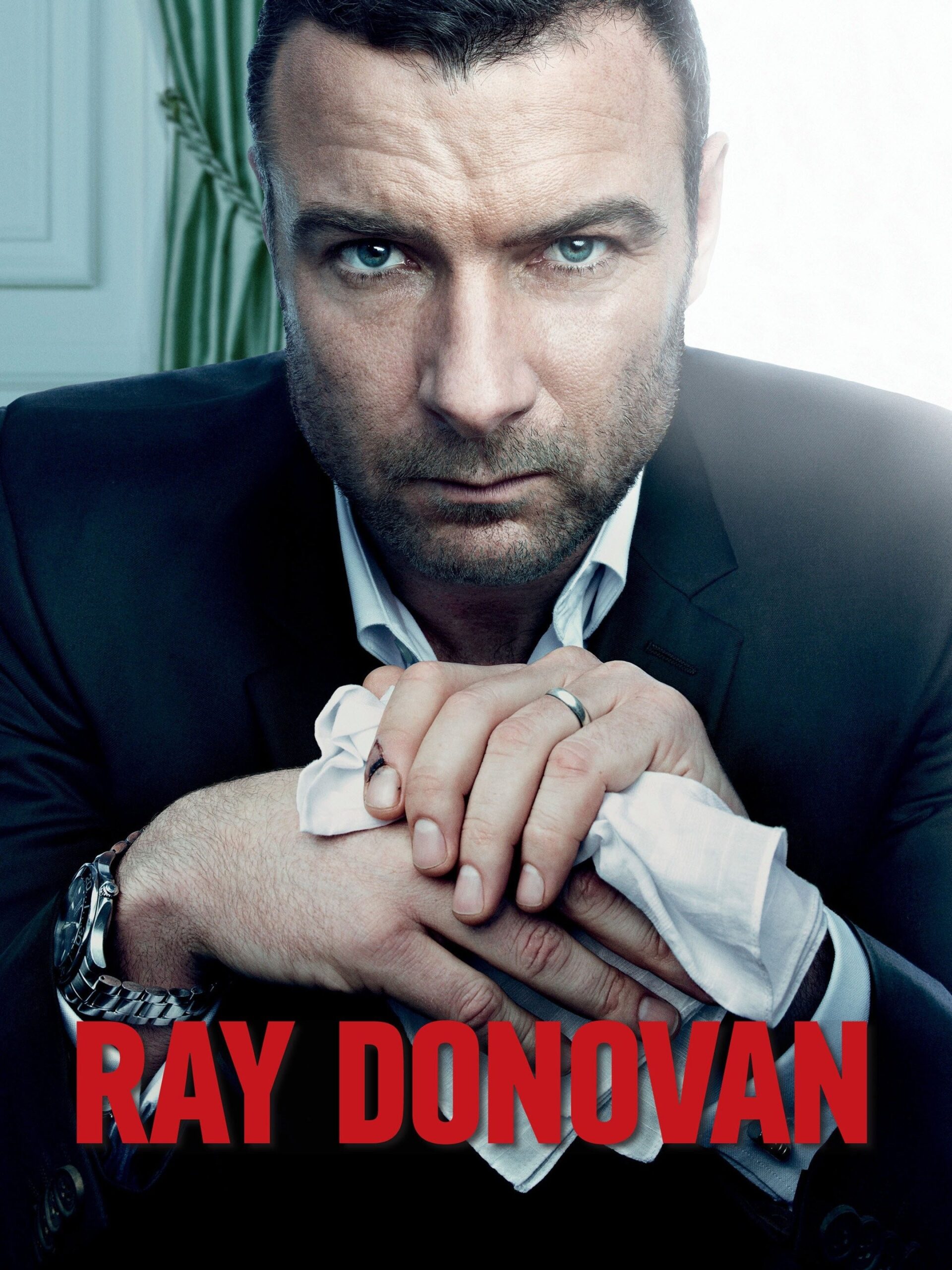
Why “Ray Donovan” Remains Essential “Must See” Television
Fifteen years of writing about television, and I still measure certain characters by the yardstick of Ray Donovan.
Ray Donovan, The Fixer We Can’t Forget – Let me be blunt: we are currently drowning in content. Prestige dramas are a dime a dozen, antiheroes have become a cliché, and the “complex male protagonist” has been done to death. So why, in 2026, am I urging you to go back and watch a show that ended its original run six years ago?
Because Ray Donovan is not just another entry in the crowded genre of cable antihero dramas. It is something rarer: a patient, bruising, and unexpectedly tender examination of what it means to be the man everyone leans on—and the man no one is allowed to save.
Here is why this seven-season masterpiece deserves a spot on your watchlist, whether you missed it the first time or dismissed it as just another Showtime tough-guy romp.
The Briefest of Briefings: Who Is Ray Donovan?
If you somehow missed the cultural footprint of this series, here is the elevator pitch: Ray Donovan (Liev Schreiber) is a Hollywood fixer. He doesn’t represent actors for Emmys; he represents them when they wake up next to dead women. He doesn’t negotiate contracts; he negotiates the disappearance of incriminating cell phone videos. He is the man the rich and powerful call when they need a problem to simply cease to exist .
But the show is not really about Hollywood’s underbelly. That is just the bait.
The hook arrives in the pilot, when Ray’s father, Mickey Donovan (Jon Voight) , is released from prison after twenty years. Mickey is a South Boston mobster of the old school—charming, manipulative, and utterly devoid of a moral compass. He descends upon Ray’s meticulously constructed California life like a wrecking ball, and the series becomes a seven-year excavation of a question: Can a man ever truly escape the man who made him?
The Donovan Paradox: A Character Study in Contradictions
Here is where Ray Donovan separates itself from the pack. In the hands of creator Ann Biderman (NYPD Blue, Southland), Ray is not constructed as a man we root for despite his flaws. We root for him because of them.
The Strong, Silent Type—Reimagined
Liev Schreiber delivers what I still believe is one of the most underappreciated performances of the 2010s. Ray is a man of remarkably few words, but Schreiber fills the silence with volumes. Watch his eyes when his daughter Bridget looks at him with equal parts love and fear. Watch the micro-tension in his jaw when his wife Abby expresses loneliness. Watch the way his posture shifts from controlled calm to barely contained violence depending on which brother needs protecting .
Biderman conceived Ray as a deliberate throwback to the noir heroes of her youth—Robert Mitchum, Lee Marvin—men who communicated through action rather than articulation . But unlike those archetypes, Ray is allowed to be wounded. As Schreiber himself noted, the character operates with “great vulnerability cloaked in violence and rough exteriors” . This is not the invincible strongman; this is Atlas, visibly straining under the weight of the world, refusing to acknowledge his back is breaking.
The Brothers Donovan: A Portrait of Inherited Trauma
If Ray Donovan were simply a showcase for its lead, it would be worth watching. But the show’s secret weapon is its depiction of male siblinghood—specifically, how three brothers process the same childhood trauma in radically different ways.
Terry Donovan (Eddie Marsan) , the eldest, is a former boxer living with Parkinson’s disease. His tremor is the physical manifestation of a life spent taking hits—in the ring and out of it. Bunchy Donovan (Dash Mihok) carries the most visible scars: as a child, he was molested by a Catholic priest, and his adulthood is a halting, often tragic attempt to feel safe in his own skin. And then there is Daryll (Pooch Hall) , Mickey’s son by another woman, who spent his life craving the paternal affection the legitimate sons reject .
Each brother represents a different survival strategy. Terry endures. Bunchy collapses and rebuilds, collapses and rebuilds. Ray controls. And Mickey? Mickey exploits. Jon Voight’s Oscar-caliber work transforms Mickey from a cartoon villain into something far more unsettling: a man who genuinely believes he loves his sons, even as he systematically destroys them .
Why It Stands Alone in the Genre
The comparison to The Sopranos is inevitable, and I made it myself in 2013 . But a decade later, I’ve come to appreciate Ray Donovan’s distinct DNA.
Where Tony Soprano was defined by his appetites, Ray Donovan is defined by his refusal of them. He does not want power. He does not want money beyond what his family requires. He does not even seem to particularly want the violence his profession demands. He simply wants to be left alone to protect his people—a goal that remains perpetually, tragically out of reach.
The Boston Globe described the show as “a low concept series that can’t be easily reduced to a quick sentence” . That is the highest compliment. Ray Donovan resists the tidy loglines that dominate streaming-era marketing. It is a family drama wearing a crime show’s clothing. It is a meditation on repressed emotion disguised as a thriller. It moves at its own pace, confident that viewers will catch up.
The show’s commercial success supports this confidence. The Season 2 finale drew a series-high 2.52 million viewers, a 21% jump from the first season . By Season 7, despite an abrupt cancellation following CBS/Viacom’s acquisition of Showtime, it remained the network’s second-highest rated series . This was not a cult favorite; it was a quietly dominant force that critics and audiences alike defended with unusual ferocity.
And the audience has not abandoned it. Parrot Analytics reported that as recently as February 2025, Ray Donovan commanded 7.5 times the average audience demand in the UK alone, ranking in the 96.9th percentile among all drama titles . For a show that ended its broadcast run five years prior, this is not merely residual interest. This is legacy.
The Notable Performances: Beyond Schreiber
To focus exclusively on Schreiber is to slight an ensemble that consistently punched above its weight.
Jon Voight won the Golden Globe for Best Supporting Actor in 2014, and the recognition was overdue. His Mickey is a masterclass in manipulative charm—the kind of father who ruins your life and then convinces you to apologize for being upset about it. Voight plays him not as a monster, but as a narcissist so complete that he cannot perceive the devastation he leaves in his wake .
Eddie Marsan and Dash Mihok deserve equal billing in any discussion of the show’s emotional core. Marsan’s Terry carries his Parkinson’s diagnosis with a dignity that never feels like actorly affectation; the tremors are integrated into his performance rather than adorned upon it. Mihok’s Bunchy, meanwhile, delivers one of television’s most honest portrayals of adult survivors of childhood abuse. His journey is halting, non-linear, and achingly human.
Special mention must also go to Katherine Moennig as Lena, Ray’s investigative assistant, and Steven Bauer as Avi, his Israeli fixer. In a lesser show, these characters would be disposable sidekicks. Here, they are granted interiority, loyalty, and—in Avi’s case—some of the series’ most unexpectedly tender moments.
Directing the Silence: The Visual Language of Damage
Ray Donovan was never flashy. It did not employ the single-take gimmicks or saturated color palettes that define so much contemporary prestige television. Instead, directors like Allen Coulter and John Dahl favored compositions that emphasized isolation within proximity.
Watch how often Ray is photographed alone in a frame that also contains his family. Watch how frequently the camera holds on Schreiber’s face a beat too long, refusing to cut away from his silent processing. The direction understands that this is a man who cannot articulate his pain, and rather than forcing exposition, it simply observes him.
This restraint extends to the show’s treatment of violence. When Ray fights, it is quick, ugly, and devoid of choreographed elegance. These are not action sequences; they are stress responses. The show never asks us to cheer when Ray hurts someone. It asks us to understand that he believes he has no other vocabulary.
Who Is This Show For?
If you have ever:
- Wished The Sopranos spent more time on family dinner scenes and less on strip club politics,
- Appreciated the mournful masculinity of Justified or the early seasons of Yellowstone,
- Found yourself frustrated by protagonists who articulate their feelings with therapeutic precision,
- Or simply want to watch Jon Voight terrorize Southern California in a series of truly alarming turtlenecks,
—then Ray Donovan is waiting for you.
A note of caution: The show has detractors. Some viewers find Schreiber’s restraint inscrutable rather than compelling . Others argue that the series lost its way after departing Los Angeles for New York in Seasons 6 and 7, trading the Hollywood satire for more conventional crime dynamics . These are not invalid critiques. The final seasons are indeed uneven, and the show’s cancellation—followed by a 2022 feature film intended to provide closure—resulted in a conclusion that feels slightly rushed.
But even the show’s weakest episodes are elevated by performances that never condescend to the material. And the film, Ray Donovan: The Movie, provides a denouement of genuine grace—rare for a franchise revival, and evidence that this story mattered to the people who made it.
Further Reading: Where to Go Deeper
For those who want to move beyond my opinions (understandable), I recommend the following resources:
- USA Today’s 2013 feature on the show’s creation, which includes invaluable interviews with Ann Biderman and Liev Schreiber about the conception of Ray’s character .
- The New York Post’s ecstatic premiere review, which correctly identified the show as belonging in the company of The Sopranos, Breaking Bad, and Six Feet Under .
- Parrot Analytics’ 2025 demand report, which quantifies what fans have always known: this show refuses to fade from cultural memory .
- Wikipedia’s comprehensive episode and cast guide, an essential reference for navigating the sprawling ensemble .
The Final Frame
I have watched the pilot of Ray Donovan more times than I can count. I have taught it in university courses on television antiheroes. I have argued about it with colleagues who find it too grim, too slow, too resistant to catharsis.
And every time, I return to a single image from the first season: Ray, sitting alone in his car outside the family home he has just finished paying for in cash. He does not go inside. He does not smile. He simply sits, in the dark, allowing himself one moment of something that might be peace—or might be exhaustion—before the phone rings and he drives away to fix someone else’s disaster.
That is Ray Donovan in microcosm. A man who can solve any problem except the problem of how to let himself be loved. A fixer who cannot fix himself.
Seven seasons. Eighty-two episodes. One of the great understated performances in modern television.
Catch up on Showtime, or revisit the Blu-rays if you’re old-school. And when you finish, come find me. I’m always ready to talk about it.


Great article, I really enjoy reading it, I hope you post more, keep up the good work , nice reading it.