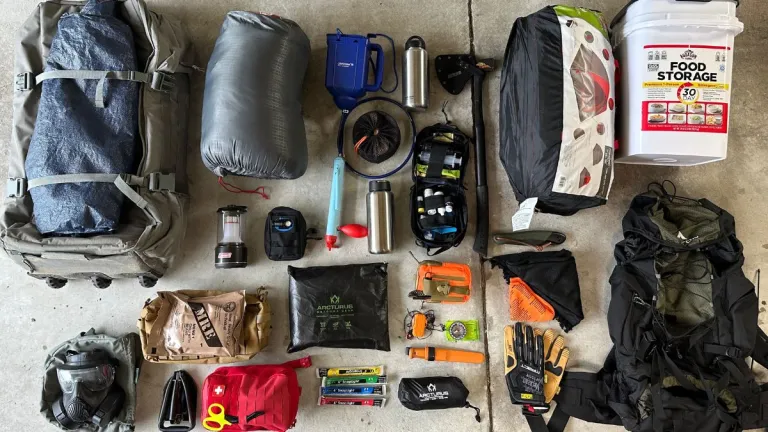
Introduction: The Rise of the New Survivalists
Survivalists or Savvy Realists? – Gone are the days when “preppers” were seen as paranoid hermits stockpiling beans in underground bunkers. Today, modern prepping is a mainstream movement—fueled by climate disasters, economic instability, and global uncertainty. A 2023 FEMA report found that over 60% of Americans have taken steps to prepare for emergencies, from power outages to supply chain disruptions.
But what drives today’s preppers? Are their methods practical, or just paranoia in camouflage? This article breaks down:
- The ideology behind modern prepping
- The validity of their survival strategies
- Real-world examples of successful prepper communities
- Bonus: Must-have survival skills & gear
1. The Ideology of Modern-Day Preppers
A. Why Do People Prep?
Preppers aren’t just waiting for doomsday—they’re preparing for realistic disruptions:
- Natural disasters (hurricanes, wildfires, floods)
- Key skills every prepper should master
- Economic collapse (hyperinflation, job loss)
- Cyberattacks & grid failures
- Political instability
Philosophy: “Hope for the best, prepare for the worst.”
B. Core Beliefs of the Movement
- Self-Reliance – Reducing dependence on fragile supply chains.
- Redundancy – Multiple backups for food, water, and power.
- Skill Over Stuff – Gear is useless without knowledge.
- Community Resilience – Strong networks survive better than lone wolves.
Quote:
“Prepping isn’t about fear—it’s about control. When disaster strikes, the prepared don’t panic.” —James Wesley Rawles, survivalist author
2. Key Skills & Techniques of Effective Preppers
A. Survival Skills Every Prepper Masters
- Water Procurement – Finding, filtering, and storing water.
- Firecraft – Starting fires without matches (ferro rods, bow drills).
- Foraging & Hunting – Identifying edible plants, trapping game.
- Emergency Medicine – First aid, suturing, herbal remedies.
- Off-Grid Power – Solar panels, generators, battery banks.
B. Advanced Prepper Techniques
- Food Preservation (canning, dehydrating, freeze-drying)
- Home Defense (firearms training, perimeter security)
- Bug-Out Strategies (escape routes, hidden caches)
Case Study:
- The Mormon Prepper Network – A highly organized community stockpiling years of food and fuel, emphasizing family preparedness.
3. Are Preppers Overreacting? Evaluating Their Validity
A. Where Preppers Are Right
- Natural Disasters – Hurricane Katrina proved government response can fail.
- Supply Chain Vulnerabilities – COVID-19 showed how quickly shelves empty.
- Cyber Threats – Power grids are hackable (see 2021 Colonial Pipeline attack).
B. Where Critics Push Back
- Over-Prepping for Unlikely Events (e.g., zombie apocalypses).
- Isolationist Mentality – Some neglect community-building.
- Cost vs. Benefit – Expensive gear doesn’t always equal survival.
Data Point:
- A University of Delaware study found that households with emergency plans suffered 70% less stress during disasters.
4. Real-World Prepper Success Stories
A. The Vermont Survival School
- Teaches urbanites wilderness survival, proving prepping isn’t just for rural dwellers.
B. The American Redoubt Movement
- Thousands relocating to Idaho/Montana for self-sufficient living.
C. Everyday Preppers
- Urban homesteaders growing food in apartments.
- Financial preppers stacking gold and Bitcoin.
Bonus: Essential Survival Skills & Gear Checklist
Top 5 Survival Skills to Learn Now
- Water Purification (LifeStraw, boiling, bleach drops)
- Fire-Starting (Bic lighter, ferro rod, magnifying glass)
- Shelter Building (Tarp, paracord, emergency blanket)
- Navigation (Topo maps, compass, GPS backup)
- Basic Trauma Care (Tourniquet, chest seals, sutures)
Must-Have Prepper Gear
✔ Multi-tool (Leatherman Wave+)
✔ Water Filter (Sawyer Mini)
✔ Solar Charger (Goal Zero Nomad)
✔ Emergency Food (Mountain House freeze-dried meals)
✔ Ham Radio (Baofeng UV-5R for comms when cell towers fail)
Conclusion: Prepping—Prudent or Paranoid?
Modern preppers aren’t waiting for the end of the world—they’re insulating themselves from predictable crises. While some take it to extremes, the core principles (self-reliance, skill-building, and community) are undeniably practical.
Final Thought:
You don’t need a bunker to prep. Start small:
- Store 2 weeks of food & water.
- Learn basic first aid.
- Have a bug-out bag ready.
Because when disaster strikes, the difference between victim and survivor is preparation.
Further Resources:
- FEMA’s Emergency Preparedness Guide
- The Survival Podcast (Practical Prepping)
- Mountain House Emergency Food
Want a deep dive on urban prepping or off-grid living? Let me know in the comments!