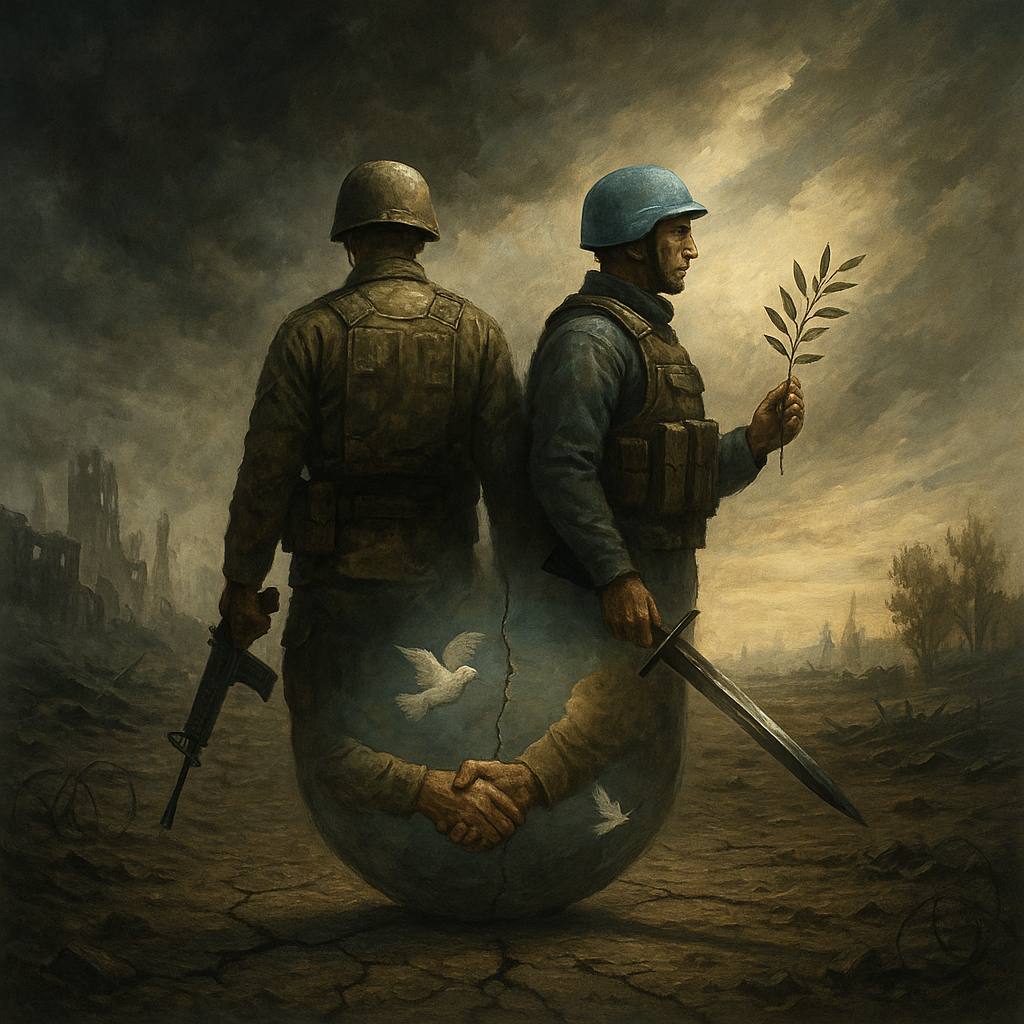
Why Lasting Peace Demands Strength and Vigilance
The Peace Paradox – From ancient battlegrounds soaked in blood to modern cities shattered by drone strikes, peace has always been the world’s most desired and least achieved ideal. Despite technological progress, global communication, and international diplomacy, true peace remains painfully out of reach.
“Si vis pacem, para bellum.” — If you want peace, prepare for war.
This ancient Roman adage captures what we at The Manly Arts call The World Peace Paradox—the hard truth that lasting peace is not achieved through weakness or passivity, but through strength, discipline, and the resolve to confront evil when necessary.
While much of the modern conversation around peace focuses on unity, compassion, and diplomacy—and rightly so—there’s a deeper, often uncomfortable truth at its core: real peace demands men of strength standing ready to defend it.
“We have guided missiles and misguided men.” — Martin Luther King Jr.
In this post, we explore why peace is so elusive, the historical and psychological roots of conflict, and why it takes hard men with harder values to keep the wolves at bay.
Why Is Peace So Elusive?
Despite millennia of technological progress and global interconnection, humanity still fails to live without war, division, and violence. According to the Global Peace Index, only a handful of countries are free from conflict in any given year. Why?
1. Human Nature Isn’t Peaceful by Default
- Tribalism: Evolution wired us for survival in small groups. We instinctively divide the world into “us” and “them.”
- Desire for Power: From kings to corporations, the thirst for dominance often overrides diplomacy.
- Fear and Scarcity: Conflict usually begins when people believe their way of life is threatened.
“Man is not a gentle creature… who is compelled to be gentle.” — Sigmund Freud
These instincts aren’t just ancient relics. They’re still hard-coded into our culture, politics, and even social media behavior.
2. History Teaches Us That Peace Is Temporary Without Power
Look back across history:
- The Pax Romana—a 200-year period of Roman peace—was enforced by disciplined legions and brutal deterrents.
- World War II ended with the strength of Allied forces confronting tyranny and genocide.
- The Cold War, while tense, stayed cold because the U.S. projected strength through deterrence.
Wherever lasting peace emerged, it was guarded—not by dreamers—but by men prepared to fight to preserve it.
“The price of freedom is eternal vigilance.” — Thomas Jefferson
The Peace Paradox in the Modern World
Today, we find ourselves caught in a dangerous illusion—that peace comes from appeasement, softness, or moral superiority alone. But history and reality tell a different story:
- Softness invites aggression.
- Moral weakness invites chaos.
- A lack of resolve invites exploitation.
We see it in the rise of global authoritarianism, the resurgence of tribal nationalism, and the spread of ideological extremism.
“There is no virtue in being harmless. Virtue comes from having the capacity for violence and choosing not to use it.” — Jordan Peterson
Peace Requires Men of Strength
At The Manly Arts, we don’t buy into the myth that masculinity is the problem. In fact, we believe it’s part of the solution.
Here’s what we mean by strength in service of peace:
1. Discipline Over Chaos
Men grounded in purpose, training, and moral clarity become anchors in a turbulent world. Peace begins with personal order.
2. Courage to Confront Evil
Whether it’s tyranny abroad or injustice at home, peace requires courage—not passivity.
3. Emotional Fortitude
Weak men lash out. Strong men control themselves. Peace grows from mastery over self before mastery over others.
4. Brotherhood and Honor
Peace doesn’t mean isolation. It means building tribes based on trust, loyalty, and shared values.
Building Peace from the Ground Up
You can’t expect the world to be peaceful if your own life is in chaos. Here’s where to start:
- Train your body and mind – Fitness, combat arts, discipline, reading. Strength isn’t just physical.
- Speak with clarity and conviction – Don’t fear truth. Respect others, but don’t surrender your beliefs.
- Protect the weak – Stand for those who can’t stand for themselves. That’s peace through presence.
- Lead by example – Be the man others can rely on when things fall apart.
“Blessed are the peacemakers, for they shall be called sons of God.” — Matthew 5:9
Final Thoughts: A Warrior’s Peace
Peace is not the absence of violence. It’s the presence of justice, order, and strength held in check. It is forged by men who are capable of violence but choose virtue. The man who fears no enemy is not the one who avoids conflict at all costs—it’s the one who is prepared to face it but seeks a better way.
The World Peace Paradox is not just a theory—it’s a way of life. A call for men to rise above passivity and live with purpose, discipline, and strength—not to dominate, but to defend what is good.
So no, peace isn’t easy.
It’s not passive.
And it’s not weak.
But it’s worth fighting for.
Resources & Further Reading:
- Global Peace Index – Institute for Economics and Peace
- SIPRI – Armed Conflict and Security
- Jordan Peterson – The Virtue of Strength
✊ At The Manly Arts, we don’t preach weakness disguised as virtue. We forge peace the only way it lasts—through strength, brotherhood, and discipline.