A Poem That Feels Like Home
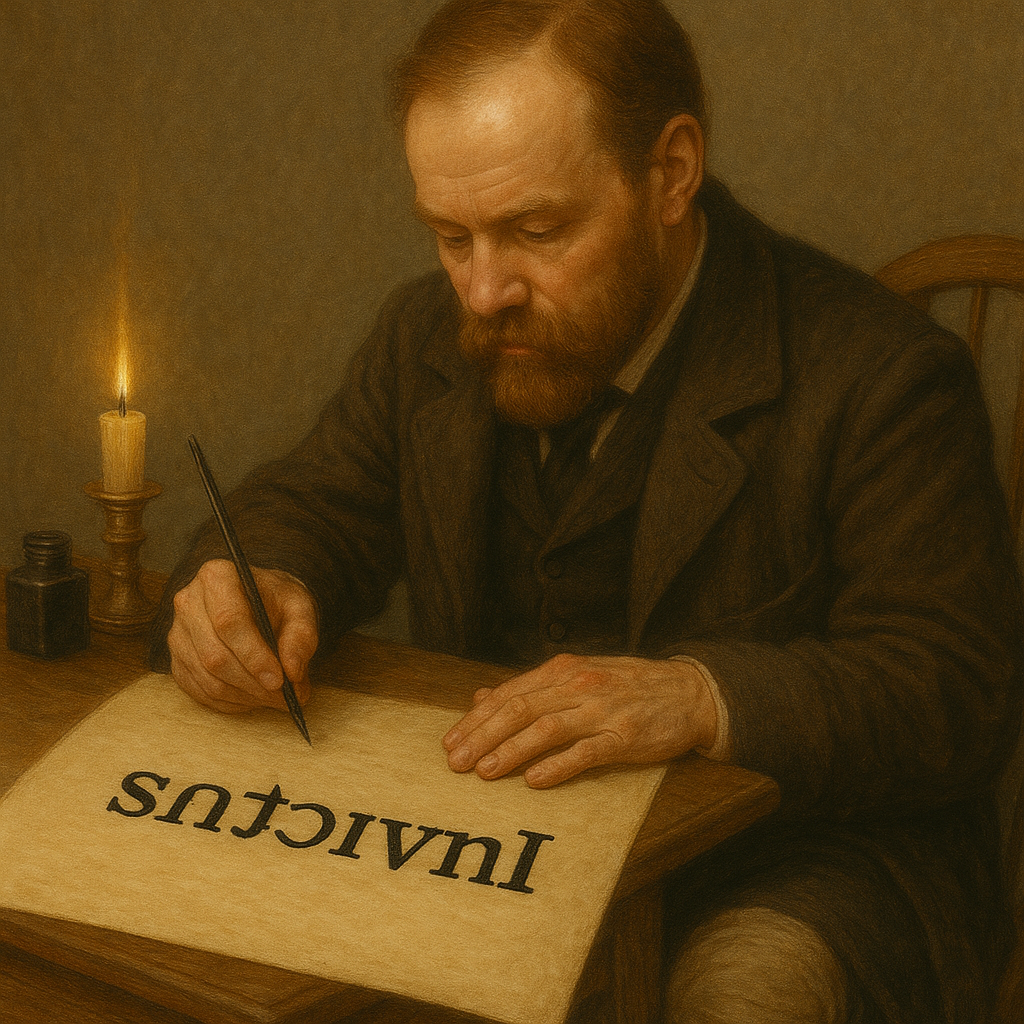
Invictus – I’ll never forget the first time my wife shared Invictus with me. We were curled up on our battered secondhand fuax leather couch, a rare rain tapping against the windows of our desert home, as she read those now-familiar lines with quiet intensity. “Out of the night that covers me…” Her voice caught slightly on “bloody, but unbowed,” and in that moment, I understood why this poem was so meaningful to her, it had carried her through her toughest years. It instantly became a favorite of mine.
William Ernest Henley wrote Invictus in 1875, but its words feel startlingly alive today. I’ve come to see it as more than poetry—it’s a companion for life’s storms. When we faced the trials and tribulations life offers, it was my wife who wrote those last two lines on notes she would sneak into my pockets or backpack. When she battled her own struggles, I’d find her whispering “I am the captain of my soul” quietly to herself.
This is why Invictus endures: not because it’s grand, but because it’s human. It meets us in Doctor’s offices and unemployment offices, in prison cells and rocking chairs, and says the one thing we most need to hear: You are broken, but not beaten.
The Poem That Breathes
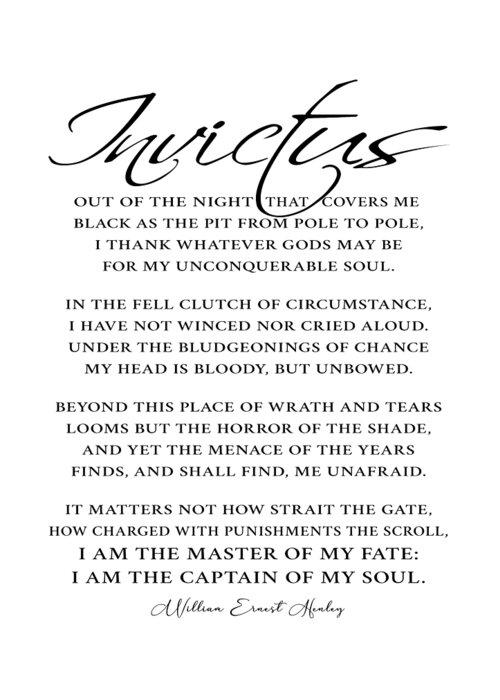
Here are Henley’s words in full—not as literary artifact, but as living breath:
The Man Behind Invictus
Henley wrote this at 25, recovering from the amputation of his left leg due to tuberculosis. The hospital smelled of carbolic acid; the anesthesia was whiskey. Yet in that hell, he crafted something astonishing—not a lament, but a love letter to human tenacity.
My wife sees herself in Henley’s story. At 23, she survived a car crash that left her with lingering injuries. “That’s the magic,” she told me once. “He didn’t write ‘I’m not in pain.’ He wrote ‘I’m in pain, and I’m still here.'”
“Invictus” and Faith: Where Stoicism and Grace Meet
As a Christian, it would be east to misinterpret Invictus—its defiant self-reliance seems at odds with belief in surrendering to God’s will. But if you look closer, you will came to see it not as contradiction, but as companion to my faith. Henley’s “I am the master of my fate” isn’t about replacing God’s sovereignty, but about embracing our God-given agency—the sacred responsibility to choose courage, even when the night is “black as the pit.” When Paul writes “I can do all things through Christ who strengthens me” (Philippians 4:13), he echoes Henley’s unbowed spirit, but roots it in divine partnership.
My wife helped me realize this in how she approaches life: now I keep Invictus tucked in my Bible beside Psalm 23, a tangible reminder that the Lord prepares a table before us in the presence of our enemies—not by removing the battle, but by making us unshakable within it. The poem’s power lies not in its rejection of help, but in its refusal to let suffering define the soul—a truth Job knew when he cried “Though He slay me, yet will I trust Him” (Job 13:15). Invictus is the grit; faith is the ground it stands on.
Making It Real: How We Live Invictus
1. The “Unbowed” Journal
Every week, write a passage on:
- One “bludgeoning” you took that week
- How you stayed unbowed
2. The Two-Minute Pause
When life overwhelms:
1) Breathe deeply
2) Say aloud: “This is the fell clutch of circumstance” (naming the struggle)
3) Finish with: “And yet—” (leaving space for defiance)
3. Bedside Poetry
I keep a copy of Invictus tucked in my Bible in my night table drawer. Sometimes before bed, I will start a read it to reset my mind—and now I look forward to reading it to our son and sharing with my adults kids teaching them “I am the captain!” and God is the sea and the wind.
The Quiet Truth of Invictus
Invictus isn’t about heroism. It’s about the small, daily choice to “not winced nor cried aloud.” It’s me doing my daily physical therapy exercises even when I hate them. It’s a father swallowing his pride to take a temp job after being laid off, a mother sacrificing her comfort for her child. It’s all of us, in our ordinary everyday courage.
Question for You:
Where does Invictus live in your life? Is there a line that’s walked with you through darkness? I’d love to hear your story in the comments—the real, raw, unbowed versions.
Why This Matters
In researching this piece, I learned Henley originally titled the poem “De Profundis” (Out of the Depths). His publisher changed it to Invictus—”unconquered.” Both titles hold truth: We write from the depths, but we rise unconquered. I am grateful to my wife for many things, and introducing me to Invictus and sharing her quiet strength and courage in the face of her personal struggles are among the things I value most.
May we all find light in our nights,
– Silverback