A Deep Dive into the Hidden Books of the Bible
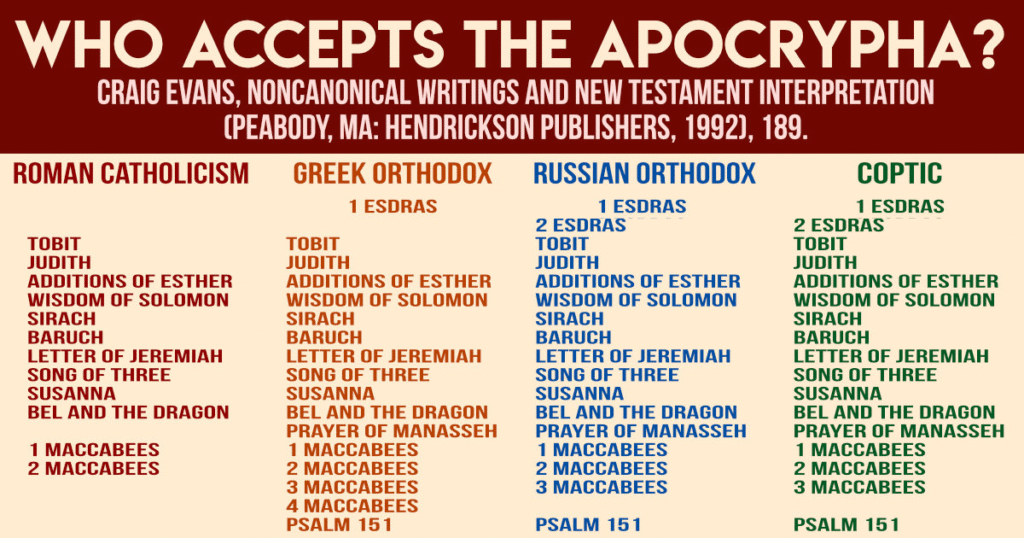
The Apocrypha refers to a collection of ancient Jewish and early Christian writings that, while historically significant, are not included in the canonical Hebrew Bible or most Protestant Bibles. These texts, however, are considered deuterocanonical (secondary canon) by Roman Catholic and Eastern Orthodox traditions.
This article explores the origins, content, and theological significance of the Apocryphal texts, shedding light on why these texts remain a subject of scholarly debate and religious reverence.
What Is the Apocrypha?
The term Apocrypha (Greek for “hidden” or “secret”) refers to writings that were widely read in Jewish and early Christian communities but were excluded from the final canon of Scripture by certain religious authorities.
Key Books of the Apocrypha
Some of the most notable books include:
- Tobit – A narrative about piety and angelic intervention.
- Judith – The story of a heroic woman who saves her people.
- Wisdom of Solomon – A philosophical text on divine wisdom.
- Sirach (Ecclesiasticus) – Ethical teachings similar to Proverbs.
- 1 & 2 Maccabees – Historical accounts of Jewish resistance against Hellenistic oppression.
- Baruch – A prophetic work attributed to Jeremiah’s scribe.
These texts were included in the Septuagint (the Greek translation of the Hebrew Bible) and later in the Vulgate (St. Jerome’s Latin Bible).
Historical Context of the Apocrypha
The Apocrypha was written primarily during the Intertestamental Period (roughly 300 BCE–70 CE), a time of cultural and religious upheaval for the Jewish people.
Why Were These Texts Excluded?
- Jewish Canonization: Around 90 CE, Jewish scholars at the Council of Jamnia (Yavneh) established a Hebrew canon excluding books not originally written in Hebrew or lacking prophetic authority.
- Protestant Reformation: Reformers like Martin Luther relegated the Apocrypha to a secondary status, arguing that they were not divinely inspired. However, he still included them in his German Bible for edification.
- Catholic and Orthodox Views: The Council of Trent (1546) affirmed the deuterocanonical books as Scripture for Catholics, while Eastern Orthodoxy includes additional texts like 3 Maccabees and Psalm 151.
As scholar Bruce Metzger notes:
“The books of the Apocrypha bridge the gap between the Old and New Testaments, offering invaluable insights into Jewish thought during a pivotal era.”
Theological and Literary Significance
The Apocryphal texts provide:
- Historical Insight: 1 & 2 Maccabees detail the Hasmonean Revolt, crucial for understanding Hanukkah’s origins.
- Ethical Teachings: Sirach and Wisdom of Solomon expand on themes of morality and divine justice.
- Messianic Expectations: Some texts (e.g., 2 Esdras) reflect evolving Jewish eschatology that influenced early Christianity.
Raymond E. Brown, a renowned biblical scholar, observed:
“The deuterocanonical books enrich our understanding of Second Temple Judaism, a backdrop against which Jesus and the apostles ministered.”
Modern Debates and Relevance
Are the Apocrypha Scripture?
- Catholic and Orthodox Christians: Accept these books as inspired.
- Protestants: Typically view them as valuable but non-canonical.
- Academic Scholars: Study them for historical and literary merit.
Why Read the Apocrypha Today?
- Cultural Context: Enhances understanding of Jewish life before Jesus.
- Literary Value: Influenced medieval and Renaissance literature (e.g., Dante, Shakespeare).
- Spiritual Enrichment: Many find devotional value in texts like the Prayer of Manasseh.
The Apocrypha For Everyone.
The Apocrypha remains a fascinating and contested collection of ancient religious writings. Whether regarded as Scripture or historical literature, these texts offer a unique window into the beliefs and struggles of Jewish and early Christian communities.
For further study, consult:
- The Oxford Companion to the Bible (Bruce Metzger)
- An Introduction to the Apocrypha (Bruce M. Metzger)
- The Jewish Apocryphal Literature (George W. E. Nickelsburg)
By exploring the Apocryphal texts, readers gain deeper insight into the rich tapestry of biblical history and theology.