Reclaiming Traditional Manhood: The Myth of Toxic Masculinity: Why We Must Reclaim Traditional Male Values
The phrase “toxic masculinity” has become a cultural touchpoint over the last decade, often cited in discussions about gender dynamics, mental health, and social behavior. Yet, the term is highly problematic—not because toxic behavior doesn’t exist, but because it inaccurately conflates harmful conduct with traditional male traits like stoicism, strength, competitiveness, and leadership. This misrepresentation has real consequences: it undermines masculinity and male traits, discourages resilience, and contributes to a mental health crisis among men.
In this article, we’ll explore why the concept of toxic masculinity is fundamentally flawed, how it misrepresents traditional male values, and why distinguishing between toxic behavior and masculine traits is essential for a healthier, more balanced society.
The Origins of “Toxic Masculinity”
Originally coined within academic and psychological circles, the term “toxic masculinity” referred to harmful behaviors such as dominance through aggression, emotional repression, and misogyny. However, in popular usage, it has morphed into a catch-all critique of masculinity itself. Qualities like stoicism, assertiveness, and competitiveness—once considered virtues—are now routinely questioned or condemned.
This broad-brush approach creates confusion. It becomes difficult to differentiate between harmful behaviors (which can and should be called out) and the natural expression of masculinity that has, for centuries, played a foundational role in society.
Traditional Masculinity Is Not Toxic
In her book The War Against Boys, Christina Hoff Sommers argues that modern educational and cultural institutions are alienating boys by dismissing their natural inclinations toward risk-taking, competitiveness, and physicality. She notes:
“We should not be trying to re-engineer boys to make them more like girls. We should be celebrating what is good and valuable in boyhood.”
Sommers highlights how the vilification of traditional masculinity can lead to negative outcomes for boys, including declining academic performance and increased rates of depression and suicide. According to the CDC, suicide is the second leading cause of death for males aged 10-34 in the U.S. (CDC Youth Data).
Clearly, discouraging young men from embracing masculine traits is not helping their mental health. Rather than eradicating masculinity, we should be guiding boys and men to express it in healthy, constructive ways.
The Damage Done by the “Toxic Masculinity” Narrative
The continued emphasis on toxic masculinity has led to a societal landscape where many men feel confused about their roles. Are they to lead or follow? Protect or yield? Compete or conform? The result is a generation of men growing up without a clear identity, disconnected from the virtues that once gave them purpose.
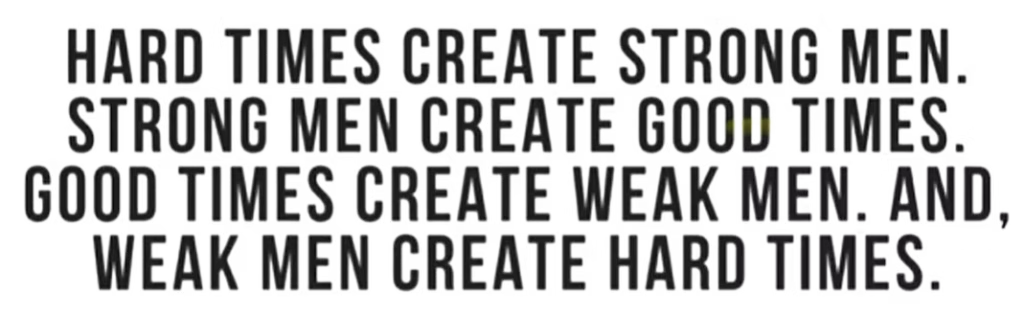
G. Michael Hopf famously illustrated this generational shift in his novel Those Who Remain:
“Hard times create strong men. Strong men create good times. Good times create weak men. And, weak men create hard times.”
This quote encapsulates the cycle of societal decline when strength and resilience are replaced with fragility and moral ambiguity. When men are taught to suppress their protective instincts, emotional fortitude, and leadership capacities, the social fabric begins to unravel.
Toxic Behavior Is Not Gender Exclusive
It’s critical to separate the concept of toxic behavior from masculinity itself. Traits like manipulation, narcissism, cruelty, and emotional abuse are not inherently masculine—they are human flaws that transcend gender. Labeling them as “masculine” does a disservice to both men and women.
Dr. Jordan Peterson, a clinical psychologist and author, often addresses this in his lectures:
“The idea that masculinity itself is toxic is an appalling concept. What is the alternative? Weakness? Fragility? No. We want strong, competent, and responsible men.”
Masculinity, when grounded in responsibility, courage, and self-discipline, serves as a stabilizing force in families and communities. Society should be promoting these virtues, not dismantling them.
What the Research Says
Numerous studies have explored the impact of male socialization and emotional suppression on mental health, but the picture is complex. While repressing emotion can lead to issues, so can the absence of structure, discipline, and purpose. A 2021 report by the American Psychological Association acknowledged the importance of context:
“Masculine norms are not inherently harmful; their impact depends largely on how they are enacted and in what settings.” (APA Guidelines for the Psychological Practice with Boys and Men)
Moreover, a study published in the Journal of Men and Masculinities found that men who identified with traditional masculine traits such as perseverance, loyalty, and assertiveness reported higher levels of well-being and life satisfaction.
Reclaiming Healthy Masculinity
If society is to thrive, it must stop shaming men for being men. Instead, we need to foster positive masculinity:
- Stoicism, not as emotional suppression, but as emotional strength in adversity.
- Leadership, not as domination, but as servant-hearted guidance.
- Competitiveness, not for ego, but for excellence.
- Protection, not from control, but from love and responsibility.
Teaching boys that these values are noble rather than shameful allows them to grow into confident, capable men. Men who know how to protect, build, serve, and sacrifice.
Moving Forward: A Call to Clarity and Courage
Vilifying masculinity does not solve the problem of toxic behavior. Instead, it creates a vacuum where purpose, identity, and strength should be. It weakens men at a time when society desperately needs them to be strong.
Rather than dismantle masculinity, we should be refining it. Celebrating the values that have built civilizations, protected the vulnerable, and raised generations.
The next time you hear the phrase “toxic masculinity,” pause and ask: Are we condemning abuse—or are we mistakenly tearing down a vital pillar of society?
Let’s reclaim masculinity as a force for good. Because when men thrive, so does everyone else.
References & Further Reading:
- Sommers, Christina Hoff. The War Against Boys. Simon & Schuster, 2013.
- Hopf, G. Michael. Those Who Remain. Michael Hopf Publishing, 2017.
- American Psychological Association. Guidelines for the Psychological Practice with Boys and Men
- CDC Youth Suicide Statistics: https://www.cdc.gov/nchs/fastats/suicide.htm
- Journal of Men and Masculinities. https://journals.sagepub.com/home/jmm