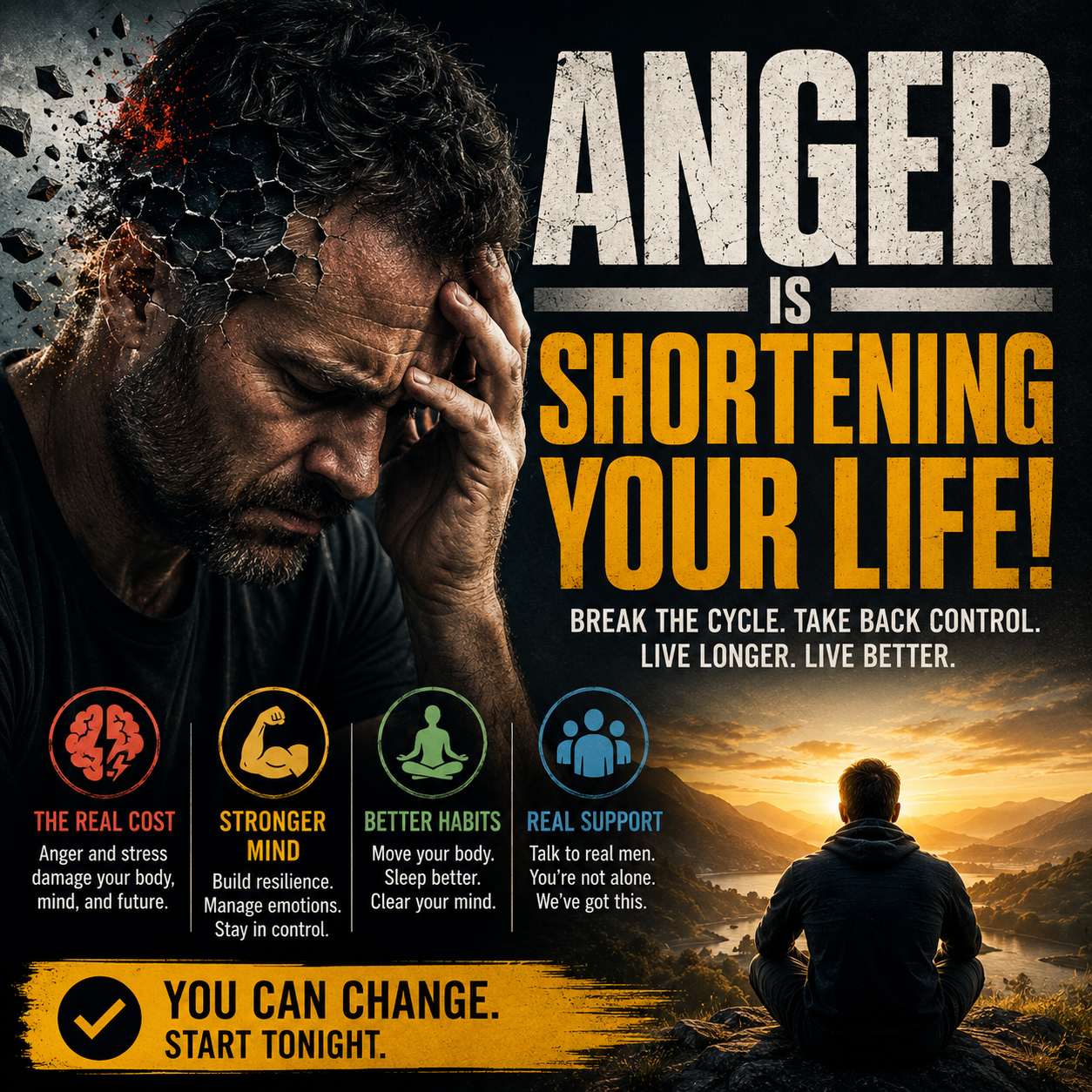
The deadly truth about the men’s anger and stress epidemic — and exactly how to reverse the damage starting tonight.
Anger, The silent epidemic no one wants to talk about is shortening men’s lives—but it doesn’t have to. I’ll be honest: I’m an angry guy, there are days when I wake up angry. Not the explosive kind, but the low, humming rage that followed me through traffic, into meetings, and straight to the dinner table. I told myself it was just “being driven” or “I’m Just frustrated.” Doctors call it something else: stress poisoning!
What I didn’t know—and what millions of American men are still ignoring—is that unmanaged anger and chronic stress aren’t just bad for your relationships and mood. They’re literally killing us. And we’re not alone. This is the men’s anger and stress epidemic, and it’s time we talked about it the way we talk about heart health or finances: directly, without shame, and with a real plan.
Why Anger and Stress Hit Men Differently (And Harder)
Men are socialized to express distress through anger. Sadness? Weak. Fear? Unacceptable. Anxiety? “Just man up.” So we convert everything into the one emotion that feels safe: rage.
Here’s what that does to the male body:
- Chronic anger elevates cortisol and adrenaline for hours or days, keeping your body in fight-or-flight mode long after the threat is gone (American Institute of Stress).
- Suppressed emotions triple the risk of heart disease in men compared to women, according to a 2021 study in the Journal of the American Heart Association.
- Stress-related inflammation contributes to diabetes, stroke, and even early-onset dementia.
A Johns Hopkins Medicine study shows that frequent episodes of strong anger are associated with a 23% higher risk of cardiovascular mortality and a 19% higher risk of heart failure. That’s not a number. That’s fathers, brothers, and friends.
“Anger is a normal human emotion, but when it becomes chronic and unexamined, it acts as a slow poison in men’s bodies—rewiring the nervous system for threat detection and dramatically shortening lifespan.”
— Dr. Redford Williams
This is an actual toxic emotional state and health concern having real time biological consequences. And it’s completly avoidable.
The Daily Toll: How Male Burnout Shows Up
You might not recognize burnout in yourself because it doesn’t look like “being tired.” In men, burnout often shows up as:
- Irritability over small things (snapping at your kid for leaving a cup out)
- Loss of pleasure in hobbies you used to love
- Physical symptoms like tension headaches, back pain, or jaw clenching
- Increased alcohol or screen use to “unwind”
- Withdrawal from friends and family
That last one is the most dangerous. Men are already less likely to have close friendships after age 35, and stress pushes us further into isolation.
If you’ve felt any of these for more than two weeks, you’re not broken. You’re experiencing male burnout solutions—or rather, the lack of them.
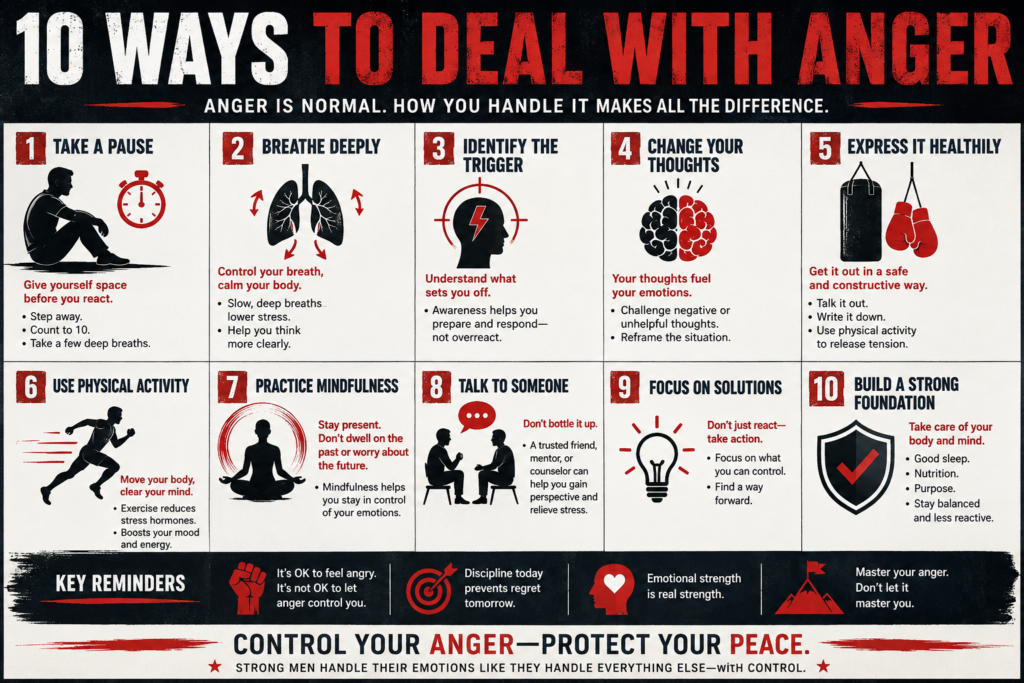
What Actually Works: Actionable Solutions for Angry, Stressed Men
We’re not going to talk about “just breathe.” You’ve heard it. Here’s what actually moves the needle.
1. Re-label the emotion.
Before you can manage anger, you have to identify what’s underneath it. Next time you feel that heat rise, ask yourself quietly:
- Am I scared?
- Am I feeling disrespected?
- Am I exhausted?
Most anger is just fear or fatigue in disguise. Name it, and you disarm half of it.
2. Build a physical release valve—that isn’t punching a wall.
Exercise works, but specific types matter more for stress:
- Heavy lifting (deadlifts, squats) burns off cortisol fast
- Zone 2 cardio (brisk walking or jogging for 45+ minutes) lowers baseline stress over time
- Boxing or martial arts give you a controlled outlet for aggression
You don’t need a gym. Pushups, sprints, or even chopping wood do the same thing.
3. Talk to someone who isn’t your partner.
Your spouse or girlfriend isn’t your therapist. Find one other man you trust—just one—and agree to check in weekly. The rule: no fixing, just listening. Five minutes of that can drop your stress by 40% (Harvard study on social buffering).
4. Get tactical with therapy.
Therapy isn’t just “talking about your feelings.” For men, the best approaches are action-based:
- CBT (Cognitive Behavioral Therapy) targets specific anger triggers
- Somatic therapy works with body tension
- Group therapy for men is surprisingly effective because you realize you’re not alone
Online platforms like BetterHelp and Talkspace offer male therapists who specialize in anger and stress.
5. Cut the stimulants and screen time after 6 PM.
Caffeine after noon and blue light before bed destroy your nervous system’s ability to reset. Try one week of:
- No coffee after 12 PM
- No screens for 60 minutes before bed
- A consistent sleep/wake time (even on weekends)
Most men see a noticeable shift in baseline anger within 5–7 days.
The Hardest Step: Admitting You’re Human
Here’s the truth no one tells you: managing anger isn’t about being softer—it’s about being smarter. A man who can feel his anger, trace it to its source, and respond instead of react? That’s not weakness. That’s mastery.
The men’s anger and stress epidemic won’t be solved by one article or one therapy session. But it can start with one man—you—choosing to do something different tonight.
Call to Action: Your Next 7 Days
You don’t have to overhaul your life. Just try these three things this week:
- One physical release. Lift, sprint, or chop something for 20 minutes.
- One honest conversation. Text one male friend: “You doing okay? I’m not great.”
- One small cut. Delete one stress source—a news app, a toxic group chat, or that 9 PM coffee.
Then come back to this article and ask yourself: Do I feel any lighter?
Because you deserve to. Your family deserves the version of you that isn’t simmering. And honestly? You’ve been carrying this weight alone for far too long.
It’s time to put it down.
Resources & References
- American Institute of Stress – Stress in America
- Mayo Clinic – Anger Management: 10 Tips to Tame Your Temper
- John Hopkins Medicine – For Your Heart: Stay Calm and Cool
Have you struggled with anger or stress as a man? Share one thing that’s helped you in the comments—it might be exactly what another reader needs to hear.