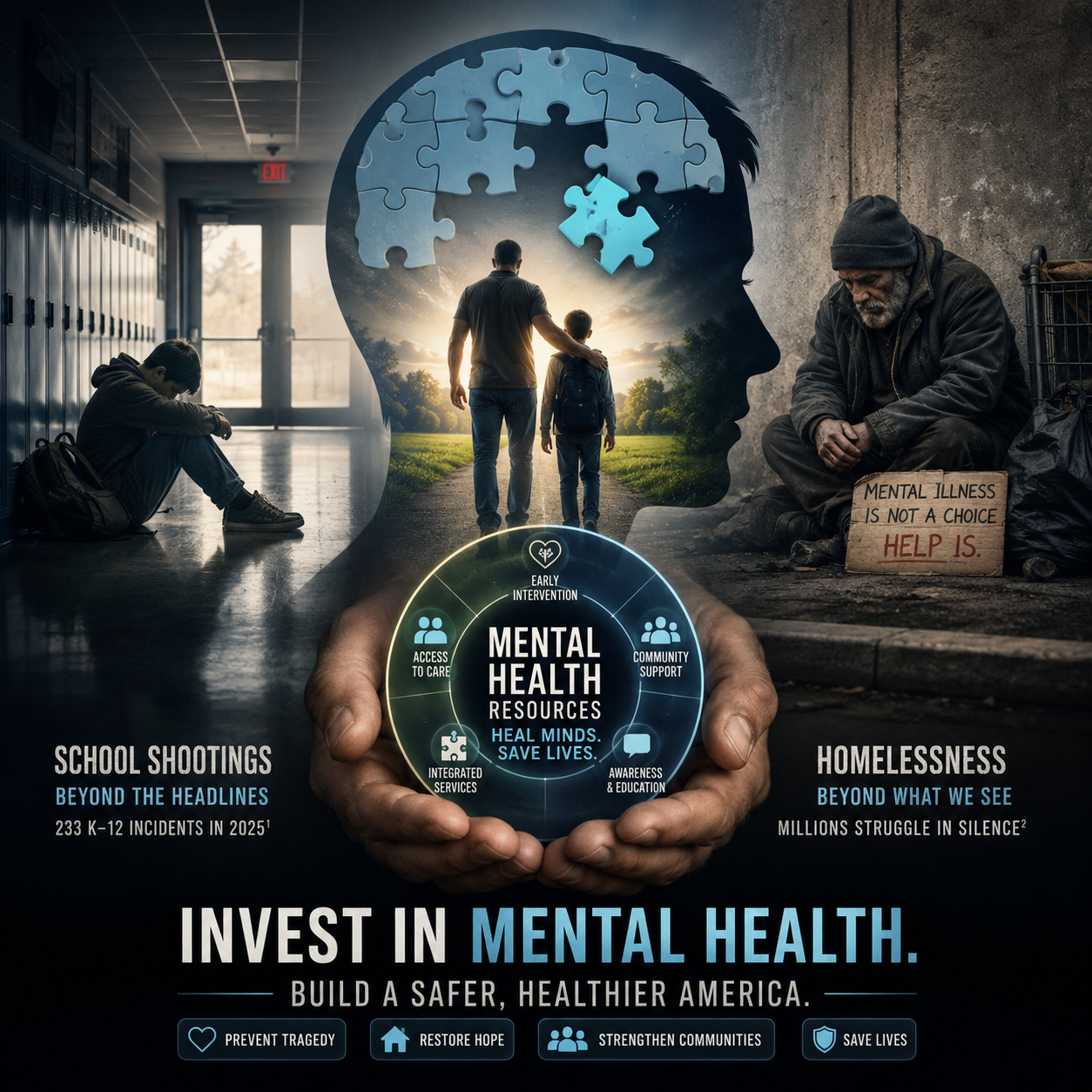
How Mental Health Resources Could Stem the Tide of School Shootings and Homelessness
America’s Mental Health Crisis – In America today, we face two interconnected crises that are tearing at the fabric of our society. The headlines scream about school shootings—233 incidents in K-12 schools and approximately 64 at colleges and universities in 2025 alone—while our streets fill with individuals experiencing homelessness, many struggling with untreated mental illness. These aren’t separate problems; they’re symptoms of the same systemic failure: our nation’s desperate need for comprehensive mental health resources.
The Stark Reality: Numbers That Demand Action
The statistics on school shootings paint a grim picture of our current reality. While 2025 saw a decrease from the all-time high of 352 incidents in K-12 schools during 2023-2024, we still recorded 233 school shootings—a number that should be unacceptable in any civilized society. Perhaps more troubling is the cumulative impact: at least 390,000 students have been exposed to a school shooting since the Columbine tragedy in 1999.
Beyond the immediate victims, these incidents create a ripple effect of trauma throughout communities. Children exposed to gun violence may experience serious adverse effects, including anxiety, PTSD, suicide risk, and substance use issues. Even safety measures intended to protect students, such as active shooter drills, may negatively affect student mental health.
The problem extends far beyond school grounds. An estimated 3 million children in the US are exposed to shootings per year, with firearms now the leading cause of death for children and teens. This exposure to violence has long-term consequences: children who witness violence are more likely to abuse drugs and alcohol, suffer from depression and anxiety, struggle academically, and engage in criminal activity.
The Mental Health Connection: A Preventable Path to Tragedy
What connects these seemingly disparate issues of school violence and homelessness? Often, it’s untreated mental illness. Research shows the most effective prevention strategies for school violence combine multiple approaches: reducing firearm access, improving threat detection, building school climates, and addressing underlying mental health and abuse issues.
In many school shooting cases, warning signs were present but unaddressed. For example, in one recent attack, the shooter had experienced mental health issues, and past classmates had observed concerning behavior years before the incident^1^. This pattern repeats itself too often—missed opportunities for intervention that could have prevented tragedy.
Similarly, a significant portion of the homeless population struggles with serious mental illness. Without access to proper treatment and support systems, these individuals often cycle through emergency rooms, jails, and shelters, never receiving the consistent care needed to stabilize their conditions.
The Fragmented System: Why Current Efforts Fall Short
Despite increased attention to school safety, our approach remains fragmented. Efforts to address the crisis through gun control legislation, targeted grant funding, and advanced security technologies show promise but lack coordination^1^. Schools are doing better with safety infrastructure, partnering with local law enforcement, and providing student mental health supports compared to 40 years ago, but these efforts often operate in silos.
The cancellation of $1 billion in federal student mental health grants by President Donald Trump’s administration represents a significant step backward^1^. These grants, including funding bolstered by the Bipartisan Safer Communities Act of 2022, played a critical role in addressing the youth mental health crisis and preventing potential incidents^1^.
A Comprehensive Approach: What Effective Mental Health Support Looks Like
To truly address these crises, we need a fundamental shift in how we approach mental health in America. This includes:
- Early Intervention Programs: Implementing comprehensive mental health screening in schools to identify at-risk youth before they reach crisis points.
- Increased Access to Care: Ensuring that mental health services are as accessible as physical healthcare, with adequate insurance coverage and provider networks.
- Community-Based Support: Developing robust community mental health centers that provide ongoing care rather than just crisis intervention.
- Integrated Services: Coordinating mental health services with schools, law enforcement, and homeless service providers to ensure no one falls through the cracks.
- Public Awareness Campaigns: Reducing stigma around mental health treatment to encourage more people to seek help before crises occur.
Research shows that investing in mental health staff in schools is gaining agreement as an important strategy. However, this investment must be part of a broader system of care that extends beyond school walls into communities.
The Economic Case for Mental Health Investment
Beyond the moral imperative, there’s a strong economic case for investing in mental health services. The full impact of each school shooting is impossible to measure; beyond the costs of medical bills and mental healthcare, nothing can replace the lives lost or erase the long-term trauma^1^.
Similarly, homelessness due to untreated mental illness places enormous financial burdens on emergency services, healthcare systems, and criminal justice. Investing in prevention and treatment is not only more humane but also more cost-effective than managing the consequences of untreated mental illness.
A Call to Action: What Men Can Do
As men, we often face unique barriers to seeking mental health support due to societal expectations of self-reliance and emotional stoicism. Breaking down these barriers is essential both for our own well-being and for modeling healthier behavior for the next generation.
Here’s what we can do:
- Normalize Mental Health Conversations: Make discussing mental health as routine as discussing physical health in our homes, workplaces, and communities.
- Support Policy Change: Advocate for increased funding for mental health services at local, state, and federal levels.
- Lead by Example: Prioritize our own mental health and openly discuss the benefits of seeking support.
- Community Engagement: Volunteer with organizations that support mental health awareness or provide services to those in need.
- Hold Leaders Accountable: Demand that our elected officials prioritize mental health funding and policies that address these interconnected crises.
The Path Forward
The decline in school shootings from 2023-2024 to 2025 offers a glimmer of hope, but we cannot become complacent. To see continued progress, we must address the root causes rather than merely treating symptoms. As we move into 2026, the focus must shift from counting incidents to preventing them through proactive approaches that include robust mental health support.
The goal must not only be to reduce the count of school shootings but also to restore a fundamental sense of safety and peace to America’s classrooms^1^. Similarly, we must ensure that those experiencing homelessness due to mental illness receive the care and support they need to rebuild their lives.
By investing in comprehensive mental health resources, we’re not just addressing immediate crises—we’re building a healthier, more resilient society where fewer people fall through the cracks. It’s time to recognize mental health as essential healthcare and fund it accordingly. The cost of inaction is measured in lives lost, potential unfulfilled, and communities traumatized—costs we can no longer afford to bear.
For further reading and resources:
- KFF Report: School Shootings and Mental Health Implications
- Everytown Research: Gunfire on School Grounds
- National Academies: School Active Shooter Drills and Mental Health
- [Substance Abuse and Mental Health Services Administration (SAMHSA) Helpline: 1-800-662-HELP (4357)]
1 Citations
School Shootings Database Shows Big Drop in 2024-2025 Incidents – Campus Safety Magazine
https://www.campussafetymagazine.com/news/school-shootings-database-shows-big-drop-in-2024-2025-incidents/172357/